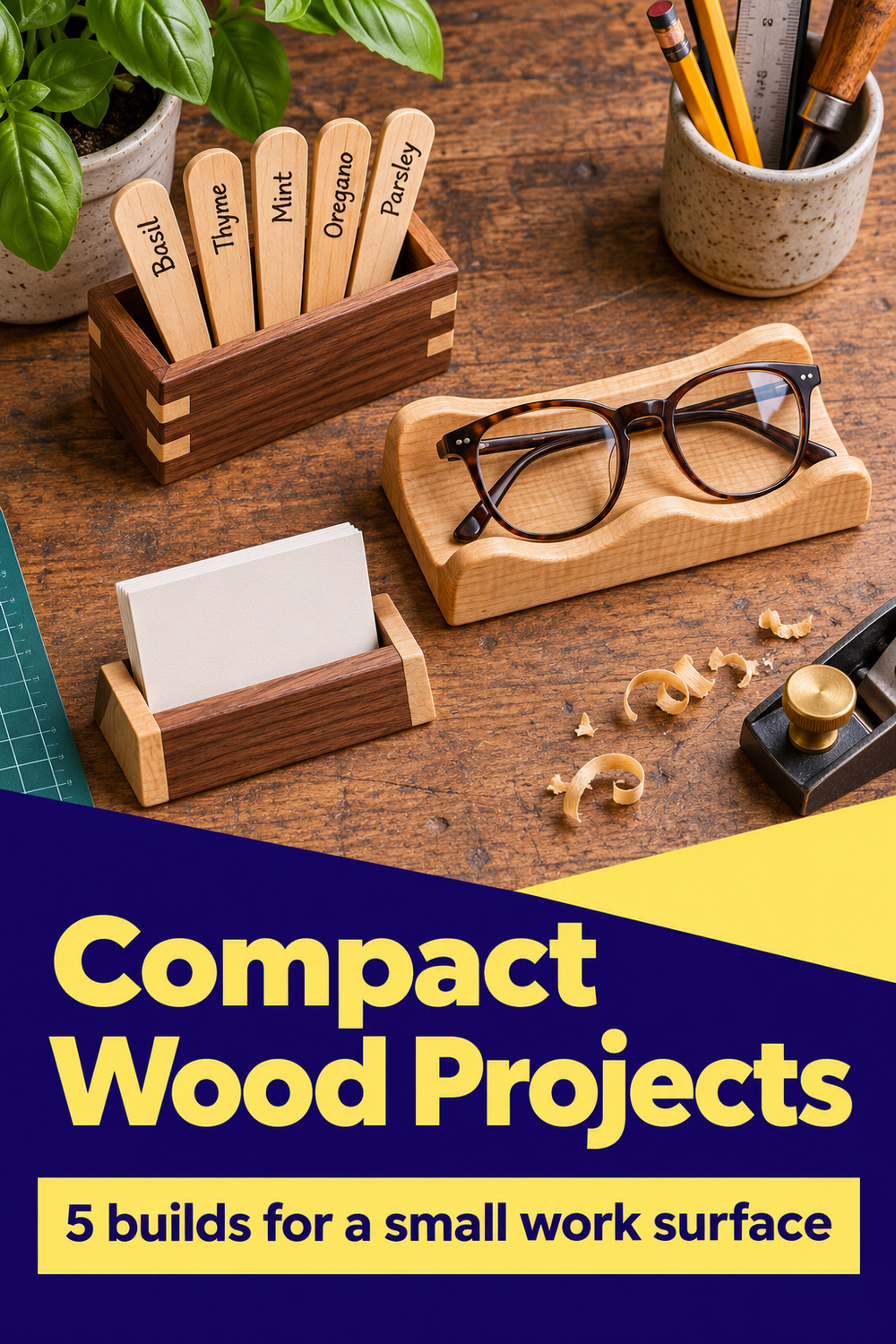
5 Compact Wood Projects You Can Build on a Small Work Surface
Easy wood projects for beginners for small spaces can be built on a modest work surface if you plan for the tools and clamps as well as the finished piece. Clear a spot for measuring and a separate place to lay parts in order. Trace your work surface on paper if space is especially tight. Use the sketch to check that a clamp can reach each joint and that you have somewhere to support the stock before you pick a project.
Five easy wood projects for beginners for small spaces
1. A holder for business cards
Start with a base and two short strips. Set the cards on the base to see how far the holder needs to extend behind them. Test the opening with the number of cards you want to keep out, and leave room to pull one from the front. Clamp or hold the strips in position with scrap blocks while you check the fit. This is a small build you can lay out on a sheet of paper, making it easy to move aside while the glue cures.
*Affiliate disclosure. I may earn a commission if you make a purchase through my links.*
If you’d like to compare other tabletop builds, browse the 50 Free Wood Plans. Look for a cut list that gives the longest part so you can check whether you can handle the stock where you work.
2. A set of plant labels
Use narrow wood strips and cut several blanks to the same length. If you’re starting with a strip longer than your bench, ask for shorter stock or arrange support for the extra length before cutting. Sand the faces, mark the plant names, and compare the writing while the labels are sitting upright in a pot. A sample label helps you decide where the writing should begin so it stays visible above the soil. Work through the blanks in batches to keep short pieces from accumulating around your tools.
3. A tabletop rest for reading glasses
Choose a short base and low ends that keep folded glasses from sliding off. Place the glasses on the loose base to check the length and leave enough room to lift them from the bridge. Round over the edges you’ll touch with a sanding block. Try a piece of felt inside if the frames slide around on the wood. The entire layout fits in front of you, so you can adjust and recheck it without moving to another work surface.
4. A block for sorting paintbrushes
Make a small rectangular base with two end supports and a bar that keeps brush handles separated. Lay your brushes on a piece of paper and mark the widest handles first. Use scrap spacers to try two layouts before cutting the supports. Assemble the supports and bar together, then set that assembly on the base and check that the brush handles sit where you want them. Doing the work in two stages leaves you room to lay the brushes out for testing.
If you want to compare another build with small subassemblies, see the 50 Free Wood Plans. Read the assembly order and check how much room you’ll need for clamps at every stage.
5. A box for spare board-game pieces
Start with precut parts for a base and four shallow sides. Sort the pieces you want to store into small piles and check how much room they take up. Mark two walls to fit between the others. Set the first pair in position and try your clamps, then repeat for the other pair. Keep a small container nearby for tiny parts so you can clear the bench to measure and assemble the box without mixing up pieces.
Set up one operation at a time
Easy wood projects for beginners for small spaces are manageable when each step has its own working area. Mark the pieces, put away the measuring tools, then set up for cutting. Clear the offcuts before dry-fitting the parts. Save the parts list and note the longest piece and widest clamp setup. Those two measurements give you a starting point for choosing your next project.
Find Out More
If you’d like to compare more projects against the work surface you have, explore the 50 Free Wood Plans.