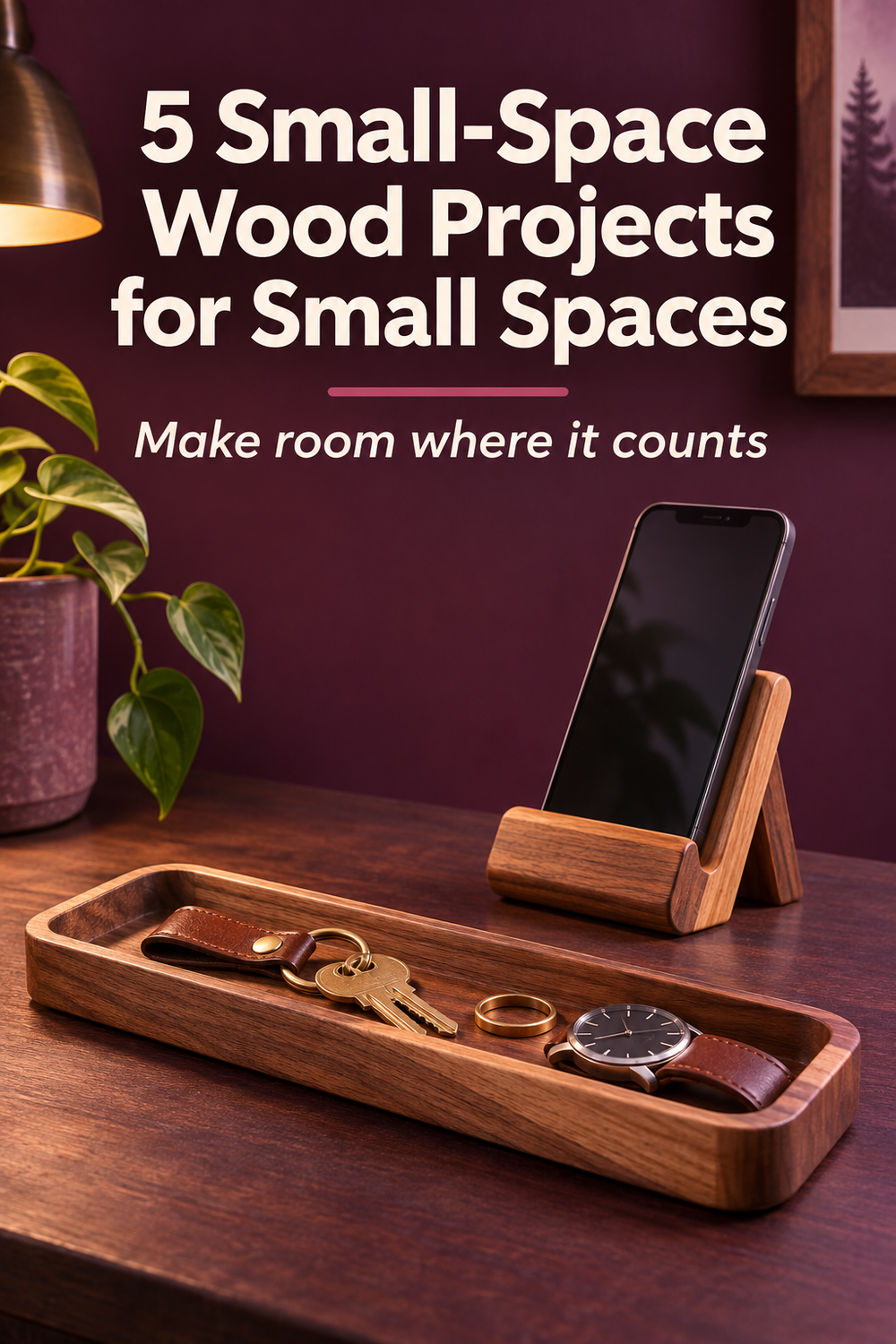
5 Small-Space Wood Projects for Small Spaces
Easy wood projects for beginners for small spaces start with an awkward spot you know well. It might be the strip of desk beside your monitor, the back of a deep shelf, or the few inches between the door and the wall. Measure the space with drawers and doors open. Then decide what you want to reach there and which direction your hand will come from. These five builds use those measurements to make compact storage easier to use.
Five easy wood projects for beginners for small spaces
Build a slim catchall for the edge of a desk
Put the things you regularly set down on a strip of paper. Line them up as you would use them, then mark the longest item and the width you need to pick it up. Cut a shallow base and two low rails, leaving the ends open if you regularly slide a pen out sideways. Dry-fit the rails around the actual objects. Set the tray against the wall and test it while seated before attaching the pieces. The opening can feel roomy from above and cramped when your wrist is close to the wall.
*Affiliate disclosure. I may earn a commission if you make a purchase through my links.*
To compare other compact layouts, browse the 50 Free Wood Plans. Look for a drawing that gives both the footprint and the usable space inside.
Make a small step for the back of a shelf
Measure the shelf depth and stack the small items you want to see from the front. Use a narrow board for a top and two matching blocks for feet. Set the loose pieces at the back of the shelf and check that the objects on top clear the shelf above. Fasten the feet square to the top and check that the finished step sits flat. Try it with light containers such as thread spools or small craft tins and put the items you reach for most often at the front.
Assemble a narrow slot for mail
Cut a base and two panels from straight stock. Stand several envelopes against one panel and use them to gauge the distance to the second panel. Leave a finger’s width of clearance to pull the shortest envelope out. Try the slot with both an empty stack and a full one before fixing the panels in place. On a shallow console, line up the long edge of the holder with the wall so the opening stays within reach.
If you want another organizer layout to compare, see the 50 Free Wood Plans. Check whether the plan shows where the parts meet and how much room the finished compartments leave.
Make a removable drawer divider
Measure the drawer at the height where the divider will sit. Cut a strip to leave a little clearance at both ends, then use two small feet to help it stand. Set the feet inside the section with fewer items, where they will take up less usable space. Before attaching them, open and close the drawer and check that the top clears the drawer frame. This approach lets you move the divider when you change what goes in the drawer.
Build a stand for a phone beside the bed
Measure the phone with its case on and decide whether it will rest upright or sideways. Make a cardboard mock-up of the base and resting angle. If you charge the phone in the stand, test the actual plug and leave space for the cable to turn. Use a short base, a front lip, and a back support, then dry-fit the pieces with the phone in place. Put the finished stand where you can reach it without moving a lamp or book.
Check the fit in the room
Easy wood projects for beginners for small spaces are worth testing where they will live. Set the piece down, open the nearest drawer or door, and reach for the item you intend to store. Use that test to decide whether to shorten a wall, shift a divider, or leave an end open.
Find Out More
If you’d like to compare another design against your measurements, explore the 50 Free Wood Plans.